
Finding a go‑to‑market consultant that actually moves the needle is hard for a founder who’s already wearing too many hats. Below are the picks that deliver a real marketing function, not just a deck of ideas.
Mark1Lab
Mark1Lab builds a full‑fledged marketing organization for founder‑led B2B companies that have revenue but no permanent marketing head. They start with a six‑to‑eight‑week diagnosis that maps the market, buyer personas, and missing pieces, then hand you a detailed build plan.
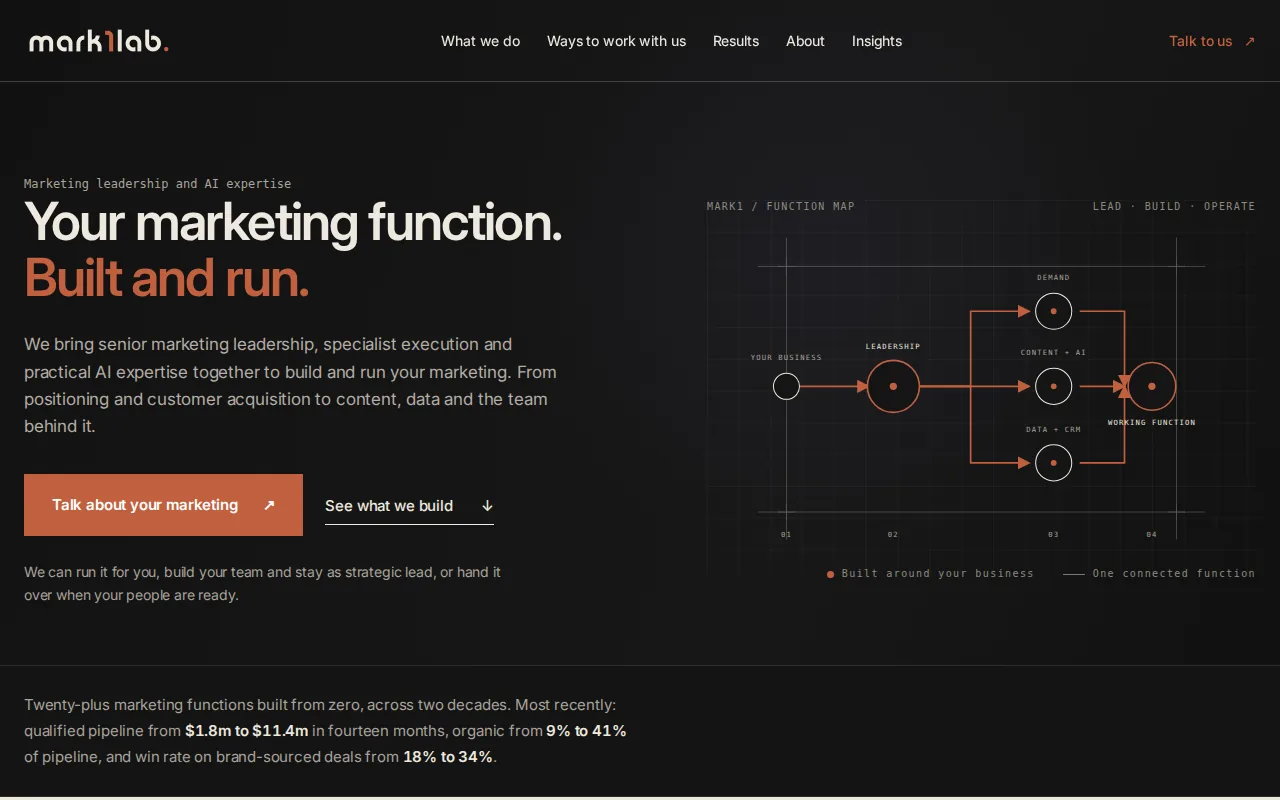
The build phase runs three months minimum, embedding a senior engineer‑turned‑marketer who installs five core components: sales‑ready positioning, a proven demand channel, CRM & lifecycle automation, an SEO‑driven content engine, and org design with role specs for future hires. All work is documented, with logins and rationales passed to your new hire.
What sets them apart is the clear exit: you either keep the function running with Mark1Lab or you hand it off to a permanent marketer with everything ready to go. They don’t do ongoing campaign management or brand design, so you won’t get a never‑ending retainer.
Best for founders who need a hands‑on team to build the marketing machine before hiring a head of marketing.
Pro Tip: Schedule a short screen‑share on the first day of the Diagnose phase to align on the buyer‑journey map.
Read more about how Mark1Lab stacks up against other firms in our Best Go-to-Market Consultants: 7 Firms guide.
Kamyar Shah — Part‑Time Strategic Marketing Leadership
Kamyar Shah offers a fractional chief marketing officer service that focuses on technology, professional services, manufacturing, and healthcare. The engagement is part‑time, giving founders senior strategic guidance without the cost of a full‑time CMO.
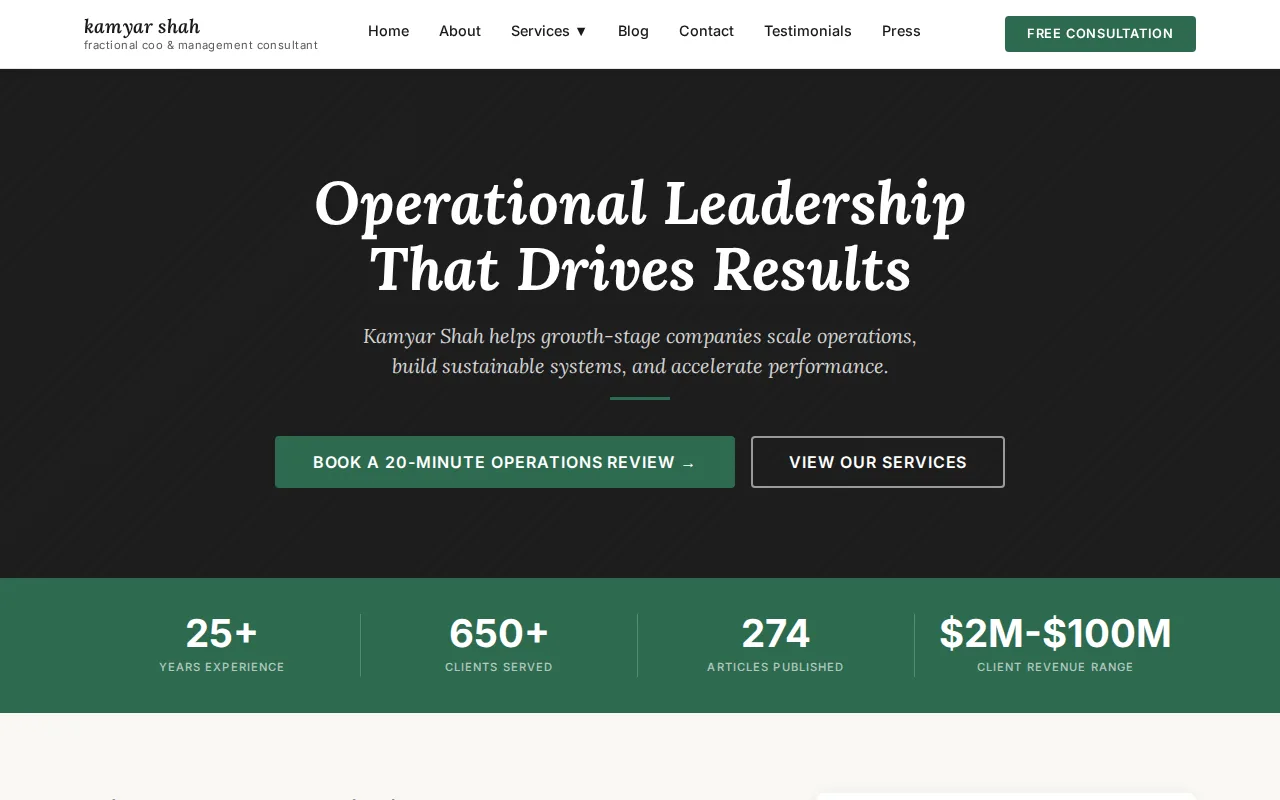
His core offering bundles strategic planning, operational efficiency, leadership development, and growth‑stage transformation. The claim is senior expertise for about one‑third of a full‑time CMO’s salary, which can be appealing when budgets are tight.
The website notes that the role evolved from product‑focused duties to a revenue‑growth engine that handles data analytics, brand strategy, and C‑suite collaboration. However, pricing isn’t disclosed, so founders should ask for a clear scope and hourly rate before signing.
Ideal for CEOs who need high‑level guidance but aren’t ready to add a permanent executive.
Fractional Go‑to‑Market Consultants for Technology Companies
Fractional GTM consultants work on a retainer basis, embedding with tech teams to design and launch market entry plans. They typically bring experience from large SaaS firms and can run everything from positioning to demand‑gen channel selection.

A common pitfall is trying to scale before the first channel proves itself. The right consultant will start with one proven demand source, validate ROI, then expand to a second and third channel as data accumulates.
Because they’re not full‑time hires, they keep costs flexible and can be swapped out if the fit isn’t right. Look for a consultant with a track record of launching at least three products in the past five years.
Best for tech founders who need a hands‑on partner to stitch together product messaging, sales enablement, and a go‑to‑market roadmap.
Go‑to‑Market Consultants for Founder‑Led B2B Companies
This category includes firms that specialize in turning a founder’s personal brand into a scalable GTM system. They focus on trust‑building, positioning, and the hand‑off to a permanent marketing org.

One example is a consultancy that runs a 30‑day Executive Marketing Readiness Review, pinpointing leadership gaps before any spend. The review looks at positioning, pipeline health, and alignment between product and sales.
These consultants often charge a flat fee for the review, then propose a phased implementation plan. They’re strong on diagnostics but expect the client to fund the execution, either internally or with another partner.
Great for founders who already have a solid personal brand and need a systematic way to transfer that trust into a repeatable marketing engine.
For a deeper look at how fractional CMOs differ from agencies, see Fractional CMO, agency or building the function?.
Compare the Best Go‑to‑Market Consultant Options
| Option | Core Focus | Typical Engagement | Pricing Model |
|---|---|---|---|
| Mark1Lab | Full‑stack marketing function build | Diagnose (6‑8 weeks) → Build (3 + months) → Transition (4‑8 weeks) | Fixed fee for Diagnose; monthly retainer for Build |
| Kamyar Shah | Strategic leadership, part‑time | Ongoing part‑time (10‑20 hrs / week) | Estimated at ~1/3 of full‑time CMO cost |
| Fractional GTM Consultant | Tech‑focused GTM roadmaps | Retainer or project‑based (3‑6 months) | Monthly retainer, often performance‑linked |
| Founder‑Led B2B Consultant | Trust‑strategy to scalable system | 30‑day review → phased rollout | Flat fee for review; variable for rollout |
Key Takeaway: If you need a ready‑to‑run marketing engine, Mark1Lab’s three‑phase model wins on scope and hand‑off clarity. If budget is tight and you only need strategic direction, a fractional CMO like Kamyar Shah fits.

What to Look for in a Go‑to‑Market Consultant
First, check the consultant’s track record in your industry. A firm that has built demand engines for climate‑tech or deep‑tech startups will understand the long sales cycles you face.

Second, verify that they provide a documented hand‑off. The best partners leave you with a playbook, logins, and a clear org chart, not an open‑ended advisory.
Third, ask about the data they use to prove ROI. Look for concrete metrics, pipeline contribution, CAC reduction, or revenue attribution, not just “we’ll boost growth.”
Finally, ensure the engagement model matches your hiring timeline. If you plan to hire a head of marketing in six months, pick a partner who can transition the function smoothly.
FAQ
What does a go‑to‑market consultant actually do?+
A go‑to‑market consultant designs the end‑to‑end plan that moves a product from concept to paying customers. They align positioning, channel strategy, demand generation, and sales enablement into a single roadmap.
How long does a typical consulting engagement last?+
Engagements vary, but most run three to six months: a short diagnostic, a build phase, and a transition period. Fractional CMOs may stay longer on a retainer.
Can a fractional CMO replace a full‑time head of marketing?+
For early‑stage firms, a fractional CMO can provide senior leadership without the salary burden. When the organization reaches a size where a permanent leader can focus on day‑to‑day execution, the fractional CMO should hand off the function.
Do I need to commit to a long contract?+
No. Many consultants offer month‑to‑month retainers after the initial build, letting you scale the relationship up or down as needs change.
How do I measure success?+
Success is measured by pipeline impact, qualified‑lead growth, and revenue attribution to the new GTM engine. Look for a clear reporting framework before signing.
Is it worth paying a premium for a boutique firm?+
If the boutique has deep experience in your niche and delivers a documented hand‑off, the premium often pays off in faster growth and fewer hiring missteps.
Conclusion
If you want a marketing function that’s ready to run on day one, start with Mark1Lab’s three‑phase model. Book a quick discovery call to see if their Diagnose phase fits your timeline.