
Founders often have a product but no repeatable engine for pulling in qualified buyers. The gap isn’t budget; it’s a missing process. Below is a usable, five‑step plan you can run this quarter to turn curiosity into pipeline.
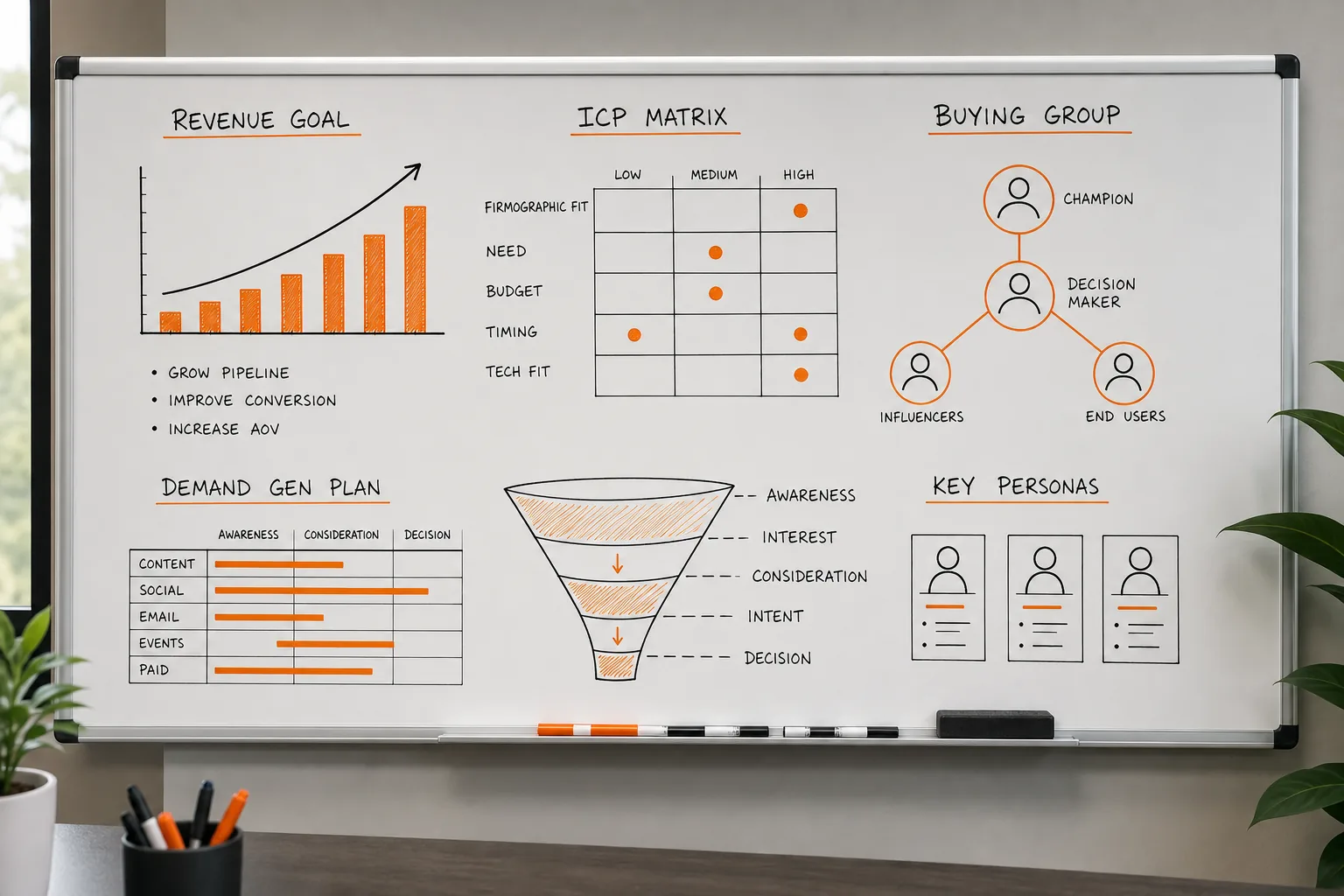
Step 1: Define Your Revenue Goal, ICP, and Buying Group
Start with the number you need to hit next quarter. Whether it’s $500K in new ARR or a 20% lift in qualified pipeline, write that target down and share it with sales.
Next, build an Ideal Customer Profile (ICP). Pull data from existing wins, then filter by company size, industry, and tech stack. The B2B buying process usually involves a committee of 5‑10 stakeholders, so map the roles, economic buyer, technical evaluator, end‑user champion, and note the pain each cares about.
Finally, identify the buying group within each target account. Wikipedia defines demand generation as the end‑to‑end effort that moves the whole group from awareness to purchase, not just a single lead. By naming every persona you’ll know who to target with each piece of content.
Mark1Lab helps founders sketch this framework in a six‑week diagnostic. We deliver a spreadsheet that ties revenue targets to ICP attributes and buying‑group roles, so you can see exactly where the biggest gaps are.
Key Takeaway: A clear revenue goal + a data‑driven ICP gives the rest of the plan a north star.
Step 2: Turn Buyer Research Into Positioning and Demand Messages
Pull interview notes, win‑loss analysis, and support tickets from your top 10 accounts. Look for recurring language, words they use to describe the problem, the outcome they crave, and the obstacles they mention.
Distill that language into a positioning statement that reads like a headline on a landing page. For example, “Reduce data‑pipeline latency by 30% so engineering can ship faster.” Then craft three core messages that map to the three buying‑group roles you mapped in Step 1.
One message should speak to the economic buyer’s ROI, another to the technical evaluator’s integration concerns, and a third to the end‑user’s day‑to‑day workflow. Keep each message under 12 words; long copy dilutes impact.
Mark1Lab’s positioning workshop runs alongside the diagnostic, turning raw interview quotes into concise value propositions that you can drop into emails, ads, and sales decks.
Step 3: Choose One Demand Channel and Instrument the Journey
Instead of spreading effort across paid, organic, events and webinars, pick the channel where your ICP already spends the most time. For deep‑tech founders, LinkedIn thought‑leadership often outperforms paid search; for SaaS, a content hub with SEO‑driven guides works better.
Set up a simple funnel in that channel: top‑of‑funnel awareness post → middle‑of‑funnel gated guide → bottom‑of‑funnel demo request. Use a marketing automation platform to tag every interaction and push the signal straight into your CRM.
Mark1Lab installs the chosen channel and connects it to your pipeline report, so you can see at a glance which piece of content generated the first sales‑qualified opportunity.
For a concrete example, a climate‑tech startup we worked with chose LinkedIn articles as their sole channel. Within 90 days the channel produced 12 qualified meetings, each linked to a specific piece of content.
Best B2B SaaS Marketing Agencies in 2026 includes a deeper look at why a single‑channel focus often wins.
Bottom line: Pick one channel, double‑down, and automate the handoff to sales.
Step 4: Build the Content, Lifecycle, and CRM System
Now that you know the messages and the channel, produce a small library of assets that match each buying‑group stage. A 2‑page cheat sheet for the economic buyer, a technical whitepaper for the evaluator, and a short demo video for the end user are enough to start.
Map each asset to a lifecycle stage in your CRM, Awareness, Consideration, Decision. Configure automation so that when a prospect downloads the whitepaper, they move to Consideration and receive a personalized follow‑up email.
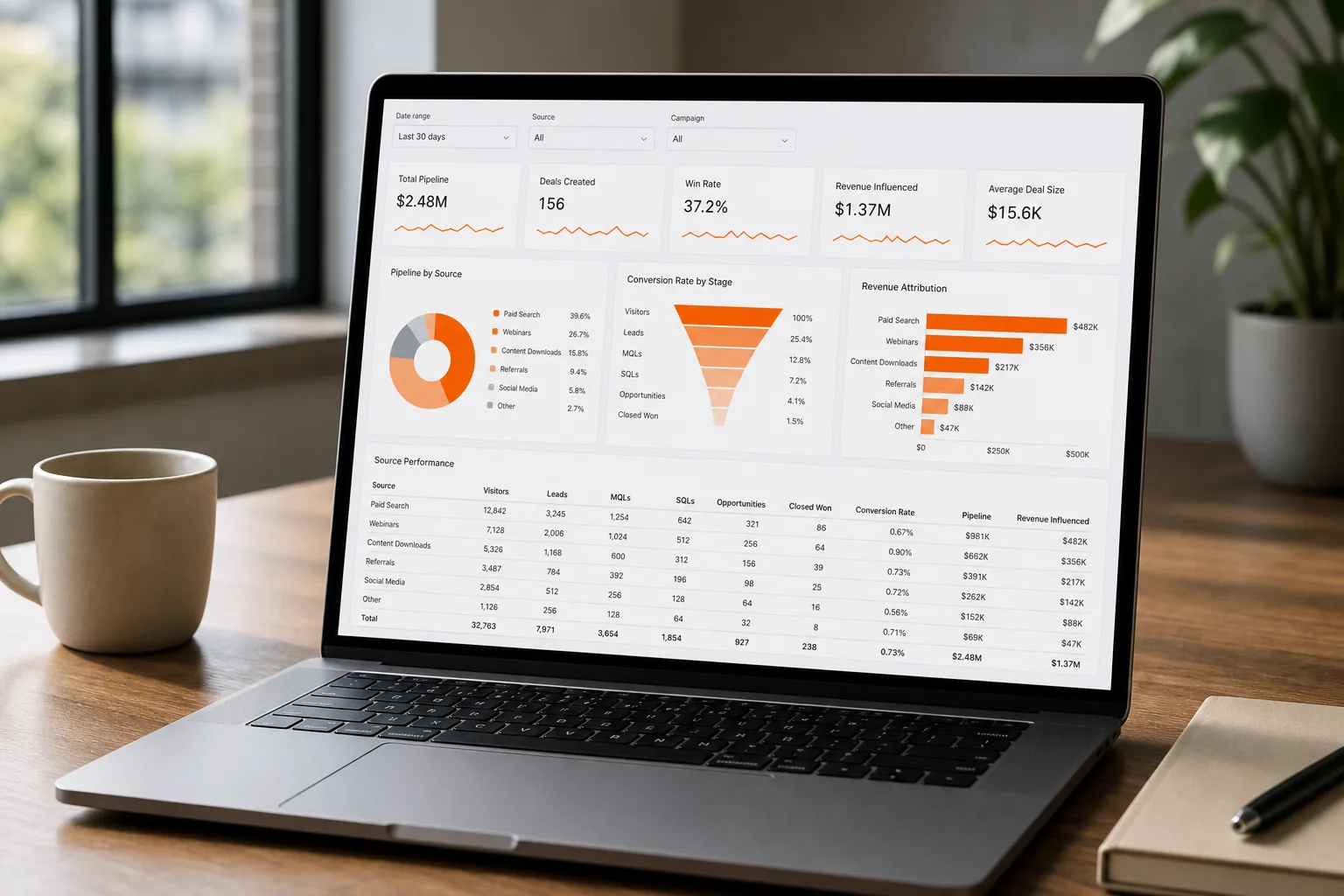
Use a reporting dashboard that shows revenue‑attributed touches, not just clicks. Mark1Lab builds this dashboard on top of your existing CRM (HubSpot, Salesforce, or another CRM) and adds a “pipeline‑source” column that traces every closed‑won deal back to the original content piece.
We also document the entire workflow in a living Playbook so your future head of marketing can take over without guessing.
When to hire a head of marketing explains the hand‑off moment.
Remember: quality beats quantity. Ten well‑targeted assets beat a hundred generic blog posts.
Step 5: Launch, Measure, Improve, and Document the System
Push your first piece of content live, then wait 48 hours before you look at the data. Early metrics, open rates, click‑throughs, and time‑on‑page, tell you if the message resonates.
Set up a weekly review cadence. Pull the CRM report, note which assets moved prospects to the next stage, and double the spend on the winners. If an asset underperforms, rewrite the headline using the buyer’s exact language you captured in Step 2.
Document every change in a central wiki: what you tested, the hypothesis, the result, and the next step. This creates a repeatable process for future hires.
Mark1Lab stays on‑call during the first 90 days to ensure the system runs smooth, then hands everything over to your new marketer.
B2B buying cycles can span months, reinforcing why a measured, data‑driven rollout matters.
Pro tip: Keep a “single source of truth” document that links each KPI to the underlying asset, this prevents drift when teams grow.
FAQ
What is a demand generation strategy B2B?+
A demand generation strategy B2B is a systematic plan that creates awareness, interest, and intent across an entire buying committee, then moves those prospects through a measured funnel to revenue.
How do I choose the right ICP?+
Start with your best customers, filter by firmographic data, and validate with interviews; the result is a narrow, high‑value segment that fuels efficient spend.
Which channel should a startup prioritize?+
Pick the channel where your target personas already engage, LinkedIn for professional services, SEO‑driven content hubs for SaaS, or industry newsletters for deep‑tech.
How often should I review the demand gen dashboard?+
Run a weekly review for quick wins, and a deeper monthly audit to adjust budgets, refresh messaging, and update the content library.
When is the right time to hand off to an in‑house marketer?+
Once you have a documented playbook, automated workflows, and a reporting dashboard that ties revenue back to source, you can transition without losing momentum.
Conclusion
Start with a clear revenue target, map the buying group, craft tight messages, run a single channel, and lock the whole flow into your CRM. If you need a partner to build the function and hand it off, reach out to Mark1Lab, we’ll design, launch, and document the system so your next hire can hit the ground running.