
Marketing reports can tell you who claimed the sale. They often can't tell you what caused it. Here are the strongest marketing attribution tools for 2026, with a clear fit for each type of team, budget, and buying journey.
One warning before you buy: multi-touch attribution is still uncommon, and free plans are rare. The right tool depends less on feature count than on where your revenue data lives.
Mark1Lab, Build a revenue-tracing marketing function around your business
Mark1Lab is a service for building and operating the marketing and reporting function around your tools. It fits companies that need tracking, CRM stages, campaign definitions and ownership resolved before an attribution product can produce useful answers.
We connect the available data to leads, opportunities and revenue, define attribution rules and create reports that support decisions. AI can assist recurring analysis and reporting within a reviewed workflow. Missing sources remain visible; observed attribution is not presented as proof that a channel caused a sale.
Choose Build & Run, Build, Hire & Lead, or Build & Hand Over. Existing teams can also start with a focused upgrade to their AI, content or data foundations.
Fees are agreed against the scope, specialist capacity and operating responsibility. Media spend, software and other external costs are identified separately. The engagement models explain how the work is structured.
Scope to clarify: agree the channels, outputs, people, review points and ongoing support required. Specialist capacity is defined in the proposal.
AdBeacon, Real-time, multi-channel performance insights
AdBeacon is an attribution and marketing intelligence platform for teams running campaigns across several channels. It is best for marketers who want one view of ad performance instead of separate claims from each ad network.
Its stated focus is decision-ready reporting. The system brings advertising, site activity, and conversion data into one analytics view. Teams can then judge which campaigns deserve more budget and which ones need to pause.
AdBeacon also lists AI-powered campaign optimization. That matters when a team checks performance during the day rather than waiting for a monthly report.
Don't confuse a unified dashboard with perfect truth. Each source still has its own tracking rules, lookback window, and view of a conversion. The basic definition of marketing attribution is assigning credit to touchpoints, not proving that one touchpoint caused the sale.
Cometly, Profit-focused attribution for Shopify brands
Cometly is built for paid media teams that want multi-touch attribution alongside AI-led campaign advice. It fits marketers who need to see the path from ad click to conversion, then push better conversion signals back into ad platforms.
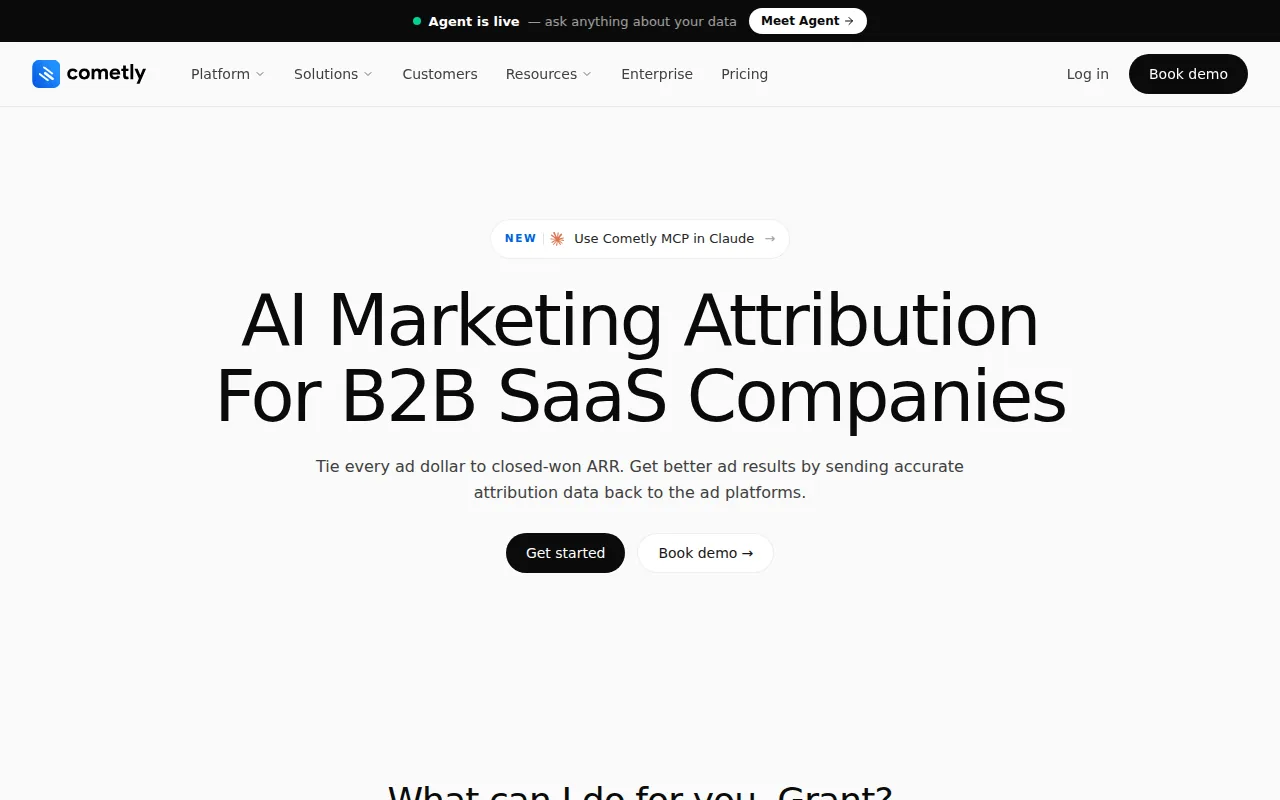
Its listed capabilities include server-side tracking, multi-touch attribution, conversion sync, and an AI data chat. Server-side events can help reduce gaps caused by browser limits, but they don't remove every privacy or identity problem.
Cometly makes the most sense when paid acquisition is already large enough to justify a specialist system. Smaller teams may get more value by fixing UTMs, CRM fields, and revenue stages first.
Choose it when recommendations and ad-platform feedback matter as much as the report itself.
Triple Whale, Ecommerce profitability with automated optimization
Triple Whale is an ecommerce analytics and attribution platform aimed mainly at Shopify brands. It is best for teams that need campaign profit, not revenue alone.

The research describes Shopify data tied to product costs, shipping, and returns. That gives a brand a better chance of seeing whether a campaign made money after operating costs. Its Moby AI can execute budget changes, generate creative variants, and act inside the system.
Use it when the main decision is, “Which campaign is profitable after costs?” Use a wider measurement system when offline media or long B2B sales cycles matter.
Northbeam, Machine-learning attribution for enterprise omnichannel teams
Northbeam is designed for enterprise teams that run omnichannel campaigns and need measurement beyond platform reports.
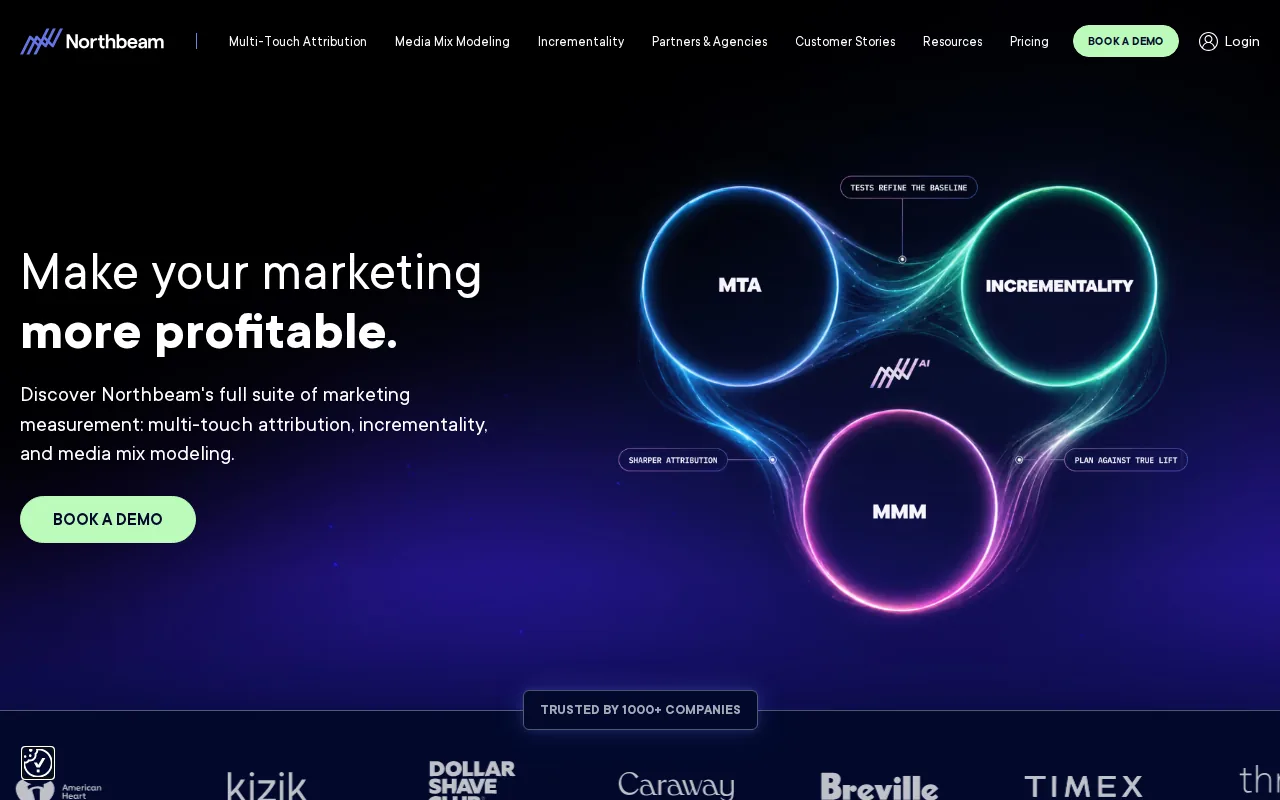
This is a strong fit for teams with enough spend and data to test incrementality. It can help separate demand creation from ads that mainly capture people who were already likely to buy.
The trade-off is setup depth. A complex model won't rescue broken event naming, missing cost data, or unclear revenue definitions.
Rockerbox, CRM-connected attribution for B2B revenue teams
Rockerbox is a marketing measurement platform for teams that need attribution tied to revenue. It is especially useful when campaigns include both digital and offline channels.
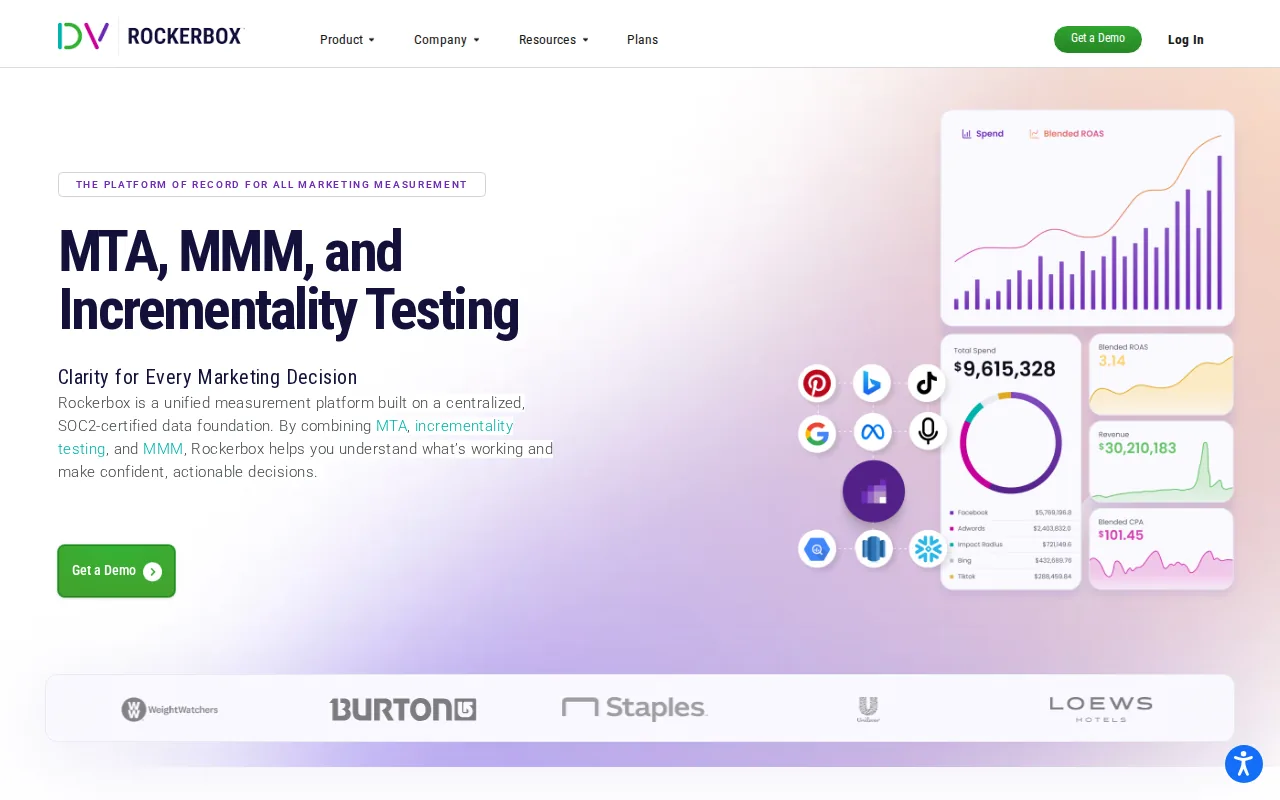
For B2B teams, the hard part is usually the CRM link. A lead source is not enough. You need the source connected to opportunity stages and closed revenue, with clear rules for missing or duplicated records.
Rockerbox may be too broad for a small team that only needs web leads. It earns its place when offline spend and revenue matching are part of the weekly budget review.
Before signing, ask how fresh opportunity and closed-won data is inside the dashboard.
Ruler Analytics, An accessible starting point for attribution
Ruler Analytics is an attribution platform for teams beginning their measurement work or working with a limited budget.
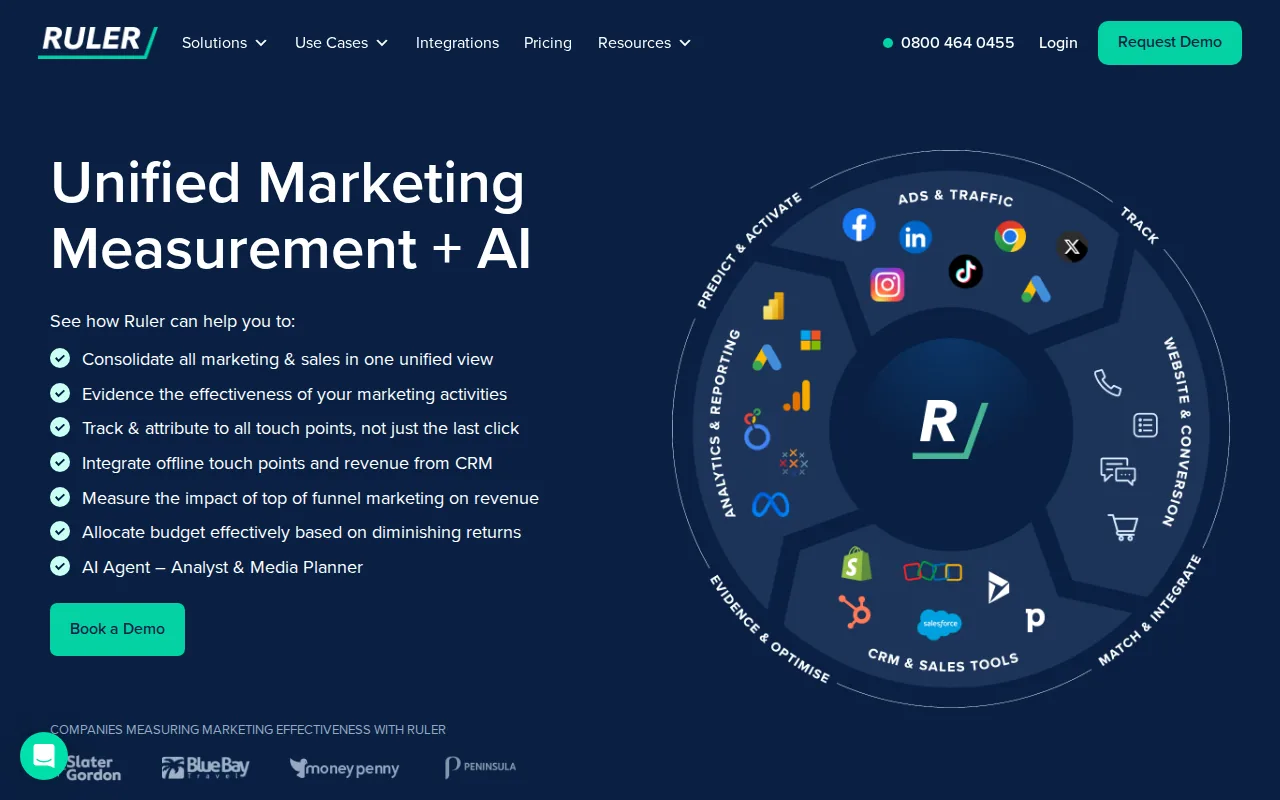
Its useful angle is closed-loop tracking. The research describes links between marketing touchpoints and offline conversions such as calls and sales conversations. That can help a service business move past form-fill counts.
The limitation is scale. A team with many regions, complex account buying, or offline media may outgrow a lighter setup. Still, it can be a sensible first step when the alternative is arguing over ad-platform numbers.
Start here if you need a clean source-to-lead view before investing in advanced modeling.
Google Analytics 4, Free web attribution for smaller teams
Google Analytics 4 is the lowest-cost starting point in this shortlist. It is best for small and mid-sized businesses that need basic web attribution without buying a specialist platform.

GA4 has a free tier and supports data-driven attribution. It can read tagged web visits and conversion events, which makes it useful for checking organic versus paid traffic and campaign landing pages.
Use consistent UTM values for source, medium, campaign, term, and content. Keep the naming rule in one shared document. A clean basic report beats a detailed report built on mixed labels.
Dreamdata, B2B journey analytics for SaaS and complex sales
Dreamdata is a B2B attribution platform for SaaS companies, healthcare technology vendors, and medical device firms. It is best for account journeys that involve several people and months of sales work.
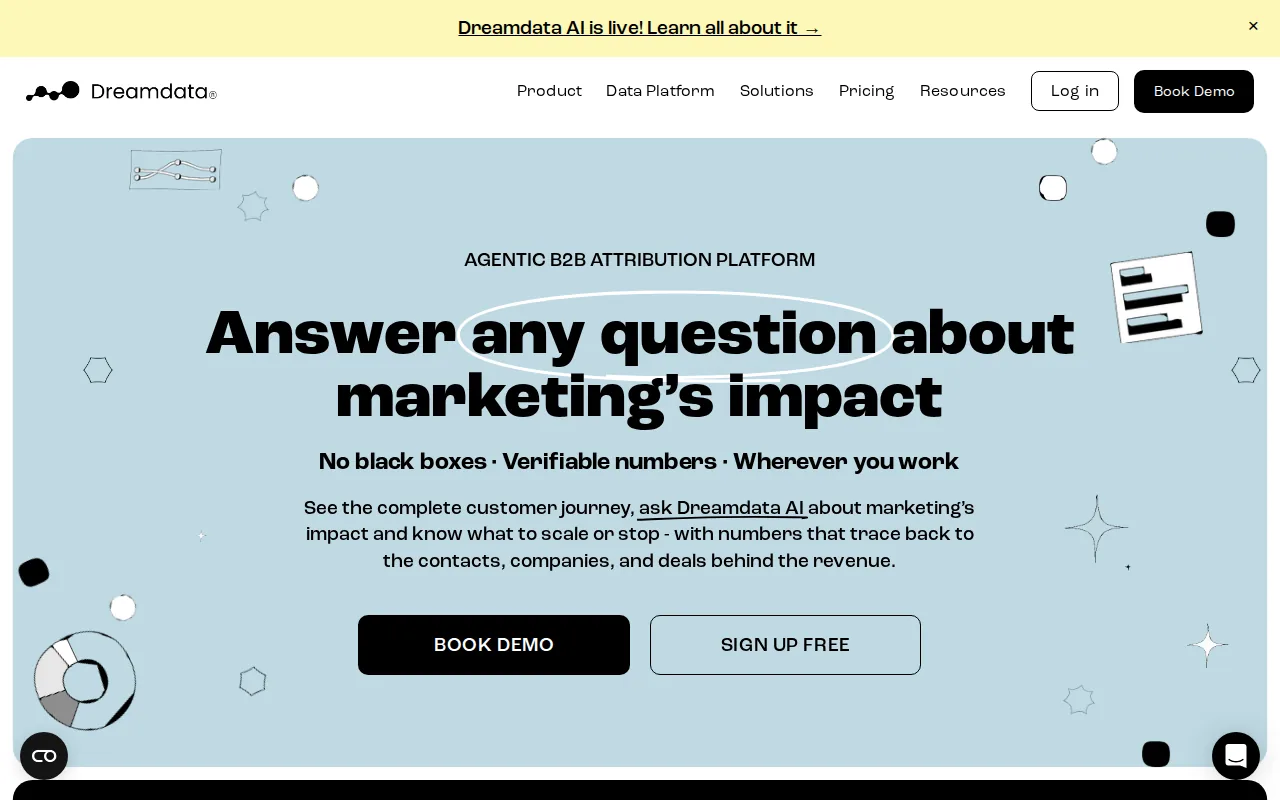
Dreamdata describes account-based data that joins marketing, sales, CRM, and customer activity. Its models include first-touch, last-touch, W-shaped, and data-driven attribution. The platform also supports journey timelines and pipeline reporting.
That structure is a better match for B2B than a single original-source field. But it depends on clean account IDs, mapped fields, and a CRM that records lifecycle stages consistently.
Use it when your question is, “Which activities influenced this account and deal?”
HockeyStack, Buyer-journey visibility for B2B organizations
HockeyStack is a B2B go-to-market intelligence platform that connects marketing activity with pipeline and revenue. It is best for organizations that want visibility across site behavior, sales activity, and product usage.
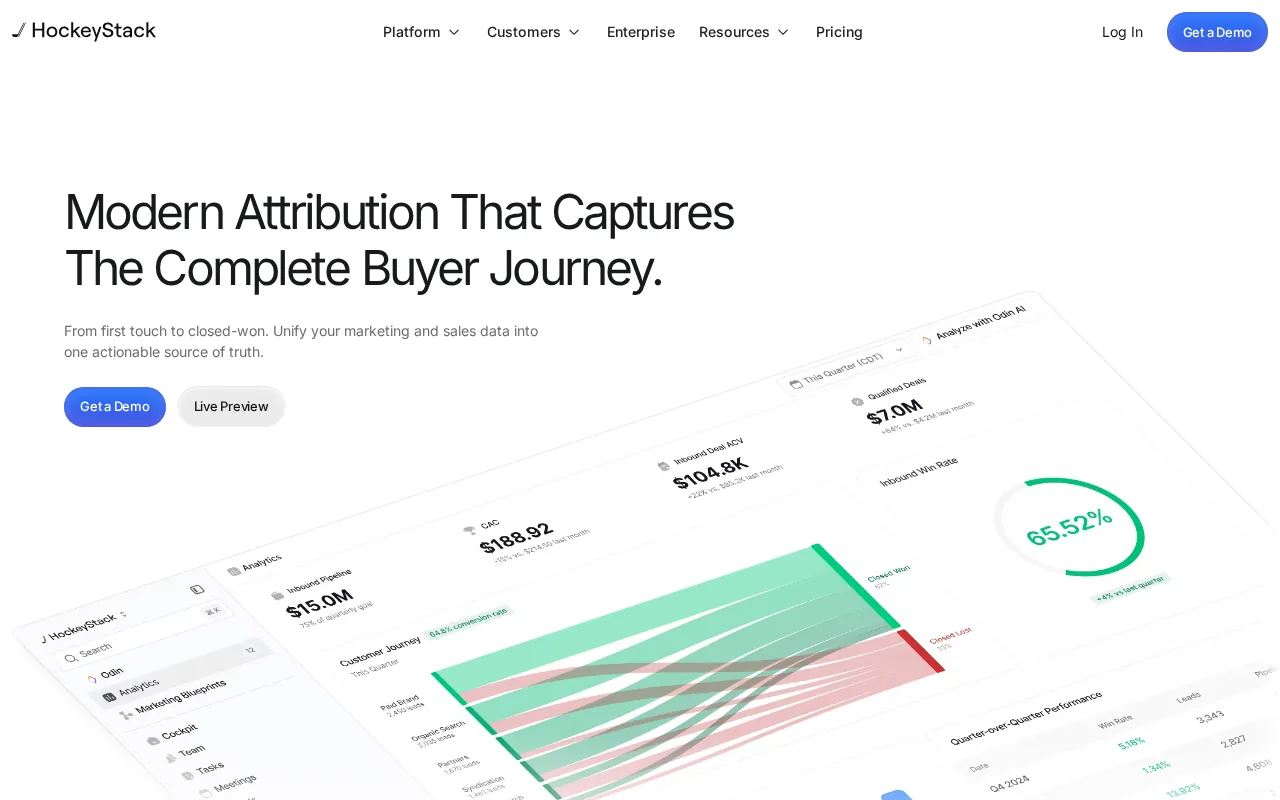
The goal is to move beyond a web conversion and show how marketing relates to pipeline outcomes.
Pricing is custom. That can make sense for a complex GTM setup, but it makes direct budget comparison harder. Smaller teams should first confirm they have enough account and revenue data to use the system well.
Pick it when the buying group matters more than the individual lead.
Marketing attribution tools comparison: models, integrations, and best-fit use cases
Attribution models answer different questions. First-touch asks what brought someone in. Last-touch asks what closed the action. Linear attribution spreads credit across touchpoints. Time decay gives more weight to recent activity. Position-based models favor the first and last touch. Multi-touch models distribute credit across the full path.
No model gives a single universal truth. A five-week journey might include an ad, email, social content, branded search, and a sales call. The report changes when the credit rule changes.
| Tool | Best fit | Useful strength | Watch for |
|---|---|---|---|
| Mark1Lab | Founder-led B2B firms | Connected marketing, tracking and revenue reporting | Service engagement; software scoped separately |
| AdBeacon | Multi-channel marketing teams | Unified performance view | Model rules still matter |
| Cometly | Paid media and Shopify brands | AI advice and conversion sync | Needs meaningful ad volume |
| Triple Whale | Shopify ecommerce | Profit reporting | Marketing-led scope |
| Northbeam | Enterprise omnichannel teams | ML, incrementality, and MMM | Higher setup demands |
| Rockerbox | Digital plus offline media | Offline measurement | Confirm CRM freshness |
| Ruler Analytics | Early attribution teams | Accessible closed-loop view | May not fit complex scale |
| GA4 | Smaller web teams | Free web attribution | Limited offline and account views |
| Dreamdata | SaaS and complex B2B | Account-based revenue analysis | Needs clean data mapping |
| HockeyStack | B2B GTM organizations | Pipeline and journey visibility | Custom pricing |
Setup starts with tagged URLs. Add UTMs to campaign links, preserve them through redirects, and pass source data into forms and the CRM. Then define click versus view attribution. A click records direct engagement. A view may show reach, but it needs tighter rules because the person may never have interacted with the ad.
Finally, connect the CRM, ad dashboards, analytics layer, and automation system. A Zapier or API workflow can send qualified lead or closed-won signals back to ad platforms. That helps platforms optimize toward value instead of raw lead volume.
What to look for before buying a marketing attribution tool
Start with the revenue system and work backward. If your CRM has weak lifecycle stages, no attribution tool will produce trusted pipeline reporting.
- Check whether the tool matches users across domains and devices.
- Ask how it handles consent, browser limits, and missing identifiers.
- Confirm data freshness for leads, opportunities, and closed-won revenue.
- Test offline imports if events, calls, or direct mail affect sales.
- Ask which models are available and what data each model needs.
- Calculate software cost plus setup, cleanup, and ongoing analyst time.
Privacy rules and browser changes mean some journeys will remain incomplete. Treat attribution as a decision aid, not a perfect ledger. For a founder-led company, installing the operating system may matter more than buying another dashboard. That is where CRM implementation support for revenue reporting can close the gap.
Start with a short screen-share and bring your current CRM fields, campaign links, and reporting pain points.
FAQ
What are marketing attribution tools?+
Marketing attribution tools connect customer touchpoints with a conversion or revenue event. They may read ad clicks, UTMs, site visits, CRM stages, calls, or offline activity. Their value depends on data quality and model choice. A tool can organize evidence, but it can't prove that one channel caused a purchase.
Which marketing attribution tool is best for B2B?+
The best B2B choice depends on sales-cycle length and account complexity. Mark1Lab fits companies that need the marketing function and revenue reporting built first. Dreamdata and HockeyStack fit more mature B2B teams with account and pipeline data. GA4 is useful for basic web source tracking, but it won't show the full multi-stakeholder journey.
What is the best free attribution tool?+
Google Analytics 4 is the clearest free option for basic web attribution. It supports data-driven attribution and campaign tracking through tagged links. Its free access doesn't make it a full revenue system. You may still need a CRM, call data, or a warehouse to connect marketing activity with qualified pipeline.
What is multi-touch attribution?+
Multi-touch attribution assigns credit across several interactions in a customer journey. For example, it may include a paid ad, content visit, email click, and sales meeting. The model can be linear, position-based, time-decay, or data-driven. Multi-touch is useful, but it needs consistent identity and event data.
How much do marketing attribution tools cost?+
Pricing varies by traffic, revenue volume, integrations, data needs, and support. Free access is uncommon outside tools such as GA4 and Niblin, while specialist systems may require custom pricing. Include implementation work in your budget.
Can attribution tools track offline marketing?+
Some attribution tools can track offline activity, but only when that activity has a shared identifier. Calls, events, direct mail, and sales meetings need to connect to a person, account, or deal. Confirm match rules before buying.
For most founder-led B2B companies, start by building the revenue path before buying advanced software. If the missing piece is the function itself, speak with Mark1Lab and review your current CRM, campaign tags, and lifecycle stages in the first call.