
Automation can keep leads moving while your team focuses on deals. But the wrong consultant leaves you with clever workflows and no clear pipeline. This shortlist compares ten named options, from Mark1Lab’s function-build model to HubSpot specialists and larger growth agencies.
Mark1Lab — Build the marketing function behind your automation
Mark1Lab is the best fit when automation is only one part of a missing marketing function. We work with founder-led B2B companies, often with 15 to 80 people, where marketing has grown through instinct rather than a repeatable system.
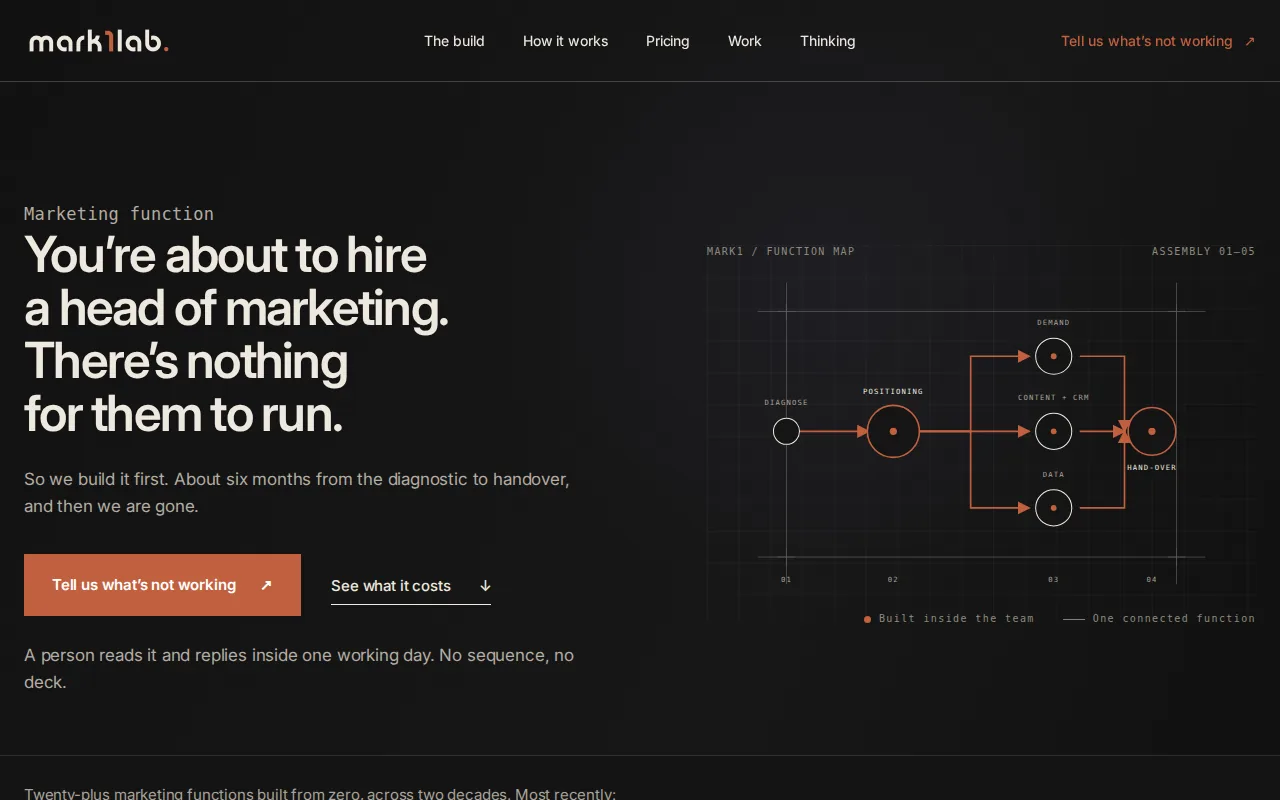
The work runs in three phases. Diagnose takes six to eight weeks and produces a build plan with costs and sequence. Build installs positioning, one proven demand channel, CRM and lifecycle automation, reporting, content structure, and org design. Transition then documents the system for the permanent hire.
That distinction matters. A marketing automation consultant can fix a workflow. Mark1Lab builds the job that owns the workflow. See The four ways to solve marketing before you hire a head if you’re weighing an internal hire against outside support.
The caveat is clear. We don’t run endless campaign retainers, produce weekly content, or tune a marketing function that already works. Who this is for: a founder who needs the missing job built, documented, and handed over.
Alex Williams — Defined HubSpot onboarding and workflow deliverables
Alex Williams suits SaaS teams with one defined HubSpot problem and no appetite for a long retainer. The work is framed around self-contained deliverables rather than open-ended support.

The listed focus includes onboarding, workflow builds, pipeline restructuring, lead scoring, integrations, and marketing automation. That makes the fit fairly clear. You might bring Alex in to repair lead routing, fix broken attribution, or clean the data foundation before sales depends on it.
Marketing automation is broader than sending scheduled emails. It uses software to automate and measure repeat marketing work, often in response to a contact’s behavior. It can also support campaign management.
The limitation is just as useful as the service list. Alex is less suited to a managed program that needs ongoing campaign ownership. Pick this option when the problem can be scoped, built, tested, and handed back.
Carrie Gallagher — Nurture sequences and lead qualification frameworks
Carrie Gallagher is a strong choice for SaaS companies that need lifecycle marketing inside HubSpot. Her work centers on nurture sequences, onboarding email flows, multi-step automation, lead qualification, and campaign reporting.
This is the right shape when your database has leads but no clear path for moving them toward a sales conversation. A sequence might begin after a resource download, change after a pricing-page visit, then stop when a sales-ready action occurs. The logic should follow the buyer’s intent, not a fixed calendar.
Good nurture work needs more than email copy. It needs segments, stage rules, useful content, timing, and a report that shows what happened next. Carrie’s stated focus joins those pieces inside one HubSpot program.
The trade-off is platform focus. If your main problem is a wider CRM migration or a company-wide RevOps redesign, a broader implementation specialist may fit better.
Jonathan Price — HubSpot implementation, CRM strategy, and RevOps
Jonathan Price fits B2B companies that need the CRM to connect marketing, sales, and customer success. His work covers HubSpot onboarding, implementation, CRM strategy, data migration, marketing automation, and revenue operations.
That wider view helps when lifecycle stages mean different things to different teams. A consultant may first define ownership and stage rules, then map the data migration, and only after that build workflows. The result should give sales a usable handoff instead of another batch of unqualified leads.
A good implementation also includes team training. People need to know which fields matter, which actions trigger movement, and which reports guide the weekly review. Otherwise, the portal slowly fills with gaps and exceptions.
Choose Jonathan when you need senior commercial thinking alongside technical work. If you only need one broken workflow fixed, this breadth may be more than the job requires.
Matt Wood — Reporting, datasets, and Operations Hub expertise
Matt Wood is the clearest fit for a messy HubSpot portal, weak reporting, or inconsistent data. His work focuses on datasets, custom reports, Operations Hub, RevOps processes, CRM cleanup, and automation.
He has nearly a decade of HubSpot experience. That depth matters when a dashboard looks polished but the underlying fields have no shared meaning. A report cannot fix a lifecycle stage that sales updates one way and marketing reads another.
He describes charging by a day or half day rather than by the hour. That gives a buyer a clearer unit for planning, though the total still depends on the work.
The caveat is important. This is a better match for data and systems work than broad campaign management. Bring a clear reporting problem, not a vague request to “do more with HubSpot.”
Mike Zak — Technical implementation and cross-hub automation
Mike Zak is suited to SaaS companies that want HubSpot to work as one connected system. His listed strengths include technical implementation, CRM optimization, reporting setup, sales enablement, and cross-hub automation.
Cross-hub work matters when marketing activity, sales tasks, and service data sit apart. A form submission may need to update a record, assign an owner, change a lifecycle stage, and start the right follow-up. Each rule needs testing because one bad field can send the wrong message to the wrong person.
Clear communication and documentation are part of Mike’s stated differentiators. That helps when the internal team must maintain the system after the project ends.
His fit is weaker if you need a full demand strategy, positioning work, or a new content engine before touching the CRM. Technical skill cannot decide which buyers you should target.
Parallel 365 — Enterprise lifecycle optimization and journey design
Parallel 365 is aimed at B2B companies that want automation tied to a wider commercial growth plan. Its focus includes automated campaign blueprints, nurture journey design, enterprise lifecycle optimization, and engagement efficiency.
The agency-first approach starts with the buyer journey before the workflow builder. That means defining the ideal customer profile, mapping stages, finding content gaps, and then choosing the automation logic. It avoids the common mistake of building sequences before deciding what each stage should achieve.
This model also connects nurture content with positioning, performance marketing, and attribution. That can help a larger team compare organic versus paid sources without treating every lead as equal.
The trade-off is scope. Smaller companies with one HubSpot repair may find an individual consultant faster. Parallel 365 makes more sense when lifecycle design needs to sit inside a broader growth system.
Directive — Revenue-accountable nurture programs
Directive fits B2B technology companies that want nurture work measured against pipeline and revenue. Its listed approach extends the Customer Generation methodology into automation programs.
That means email engagement is not the only score on the board. The buyer should ask how the consultant defines a qualified lead, how marketing hands it to sales, and how the CRM records the next commercial event.
This focus is useful when a team has plenty of campaign activity but cannot show sales impact. A revenue report should connect touchpoints with opportunities, not stop at opens and clicks.
The limitation is that Directive is better suited to a company with enough demand activity to measure. If your positioning, CRM fields, and first demand channel are still missing, fix the operating base first.
NoGood — Paid media, retargeting, and lifecycle automation
NoGood is a fit for B2B teams that want paid traffic connected to nurture and retargeting. Its stated work links top-of-funnel paid activity with lifecycle campaigns and AI-search visibility.
The useful question is what happens after the click. A visitor might submit a form, enter a qualification path, receive a message tied to the topic they viewed, and later move into a sales sequence. That chain prevents paid traffic from becoming a pile of disconnected leads.
This approach can help teams compare paid acquisition with organic sources inside the same funnel. It also suits firms that want AEO, or answer engine optimization, considered alongside their demand work.
Paid-led automation needs enough traffic and clean tracking to learn from behavior. Without that base, the system may produce activity without enough signal to guide budget choices.
WebFX — Email, CRM integration, lead scoring, and attribution
WebFX is built for mid-market teams that need a larger delivery bench and cross-channel reporting. Its listed capabilities include email marketing, CRM integration, lead scoring, and infrastructure for attributing automation activity.
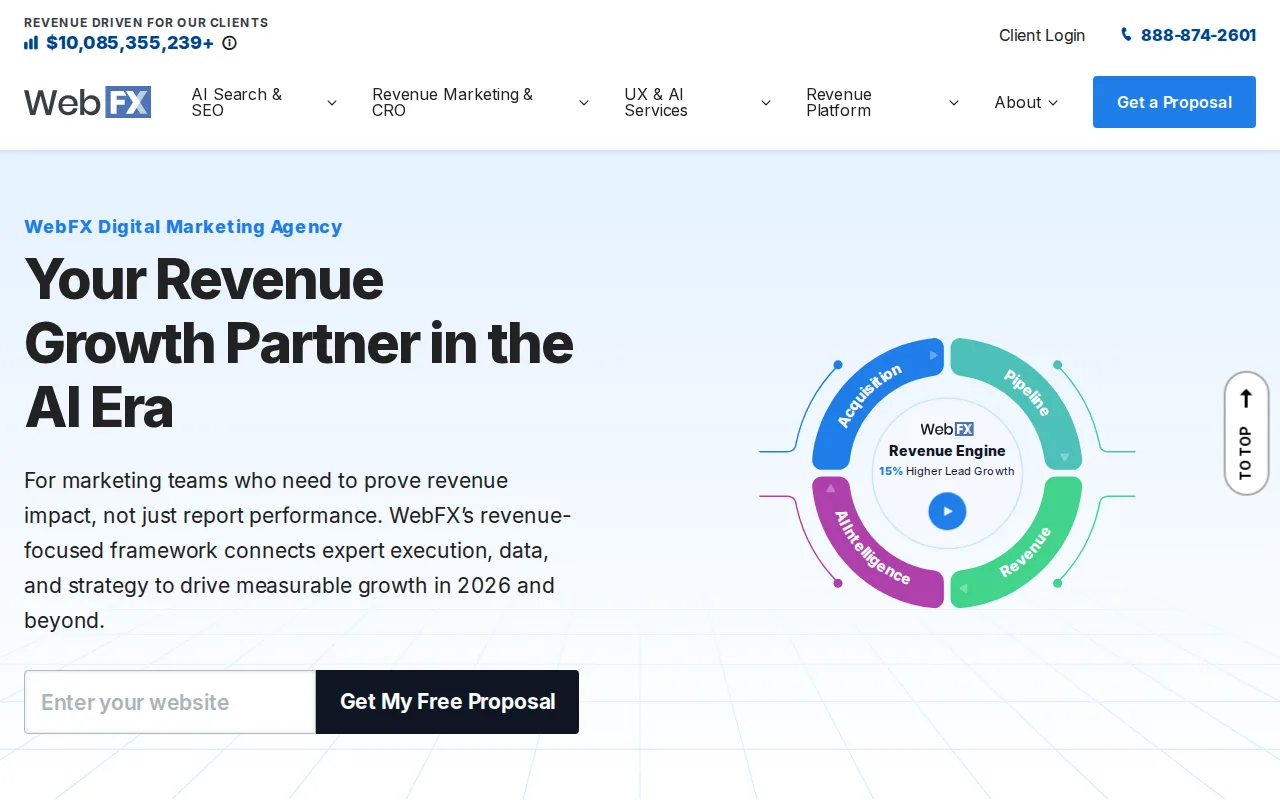
The main appeal is scale. Its positioning emphasizes a larger delivery bench and cross-channel reporting. That can help when the project needs several skill sets at once, though a larger team may bring more layers between you and the person doing the work.
Its attribution infrastructure is intended to connect marketing activity with business outcomes. Buyers should still ask which data enters the CRM, how attribution is defined, and who checks the quality of the source records.
| Option | Best fit | Main strength | Watch for |
|---|---|---|---|
| Mark1Lab | Founder-led firms missing a marketing function | Build, document, and hand over the operating system | Not for ongoing campaign management |
| Alex Williams | One defined HubSpot problem | Self-contained delivery | Less suited to long-term programs |
| Carrie Gallagher | Inbound and lifecycle teams | Nurture and qualification logic | HubSpot-centered scope |
| Jonathan Price | Full-lifecycle RevOps work | CRM strategy and implementation | May exceed a small fix |
| Matt Wood | Messy data and reporting | Datasets and custom reports | Not broad campaign ownership |
| Mike Zak | Connected HubSpot operations | Technical cross-hub work | Less suited to demand strategy |
| Parallel 365 | Enterprise lifecycle programs | Journey design before build | Broader agency scope |
| Directive | Revenue-led B2B nurture | Pipeline accountability | Needs measurable demand activity |
| NoGood | Paid media plus nurture | Full-funnel connection | Needs clean tracking and traffic |
| WebFX | Mid-market teams needing scale | Cross-channel resources and attribution | More agency layers may apply |
The review behind this shortlist found a wide transparency gap. A written scope is essential. If your main need is CRM structure before a hire, compare it with Best CRM Implementation Consultant Services before you sign.
FAQ
What does a marketing automation consultant do?+
A marketing automation consultant plans, builds, tests, and measures automated marketing workflows. The work may include strategy, platform setup, CRM cleanup, lead scoring, nurture sequences, reporting, training, and compliance checks. The best scope depends on your gap. One company needs a broken workflow fixed. Another needs the full marketing function built around the CRM.
How much does a marketing automation consultant cost?+
Pricing varies by scope, platform, seniority, and engagement model. The reviewed entries did not publish pricing, so you should request a written estimate rather than assume a software-style tier. Ask for deliverables, milestones, access needs, revision limits, and the cost of support after launch.
What should a consultant include in a marketing automation plan?+
A useful plan should include business goals, lifecycle stages, buyer segments, platform decisions, workflow rules, content needs, reporting, ownership, and training. It should also state what the consultant will not do. Without those boundaries, a short implementation can quietly become an open-ended campaign retainer.
Is HubSpot specialization better than general marketing automation experience?+
HubSpot specialization is usually better when your team already uses HubSpot and needs hands-on portal work. General experience helps with strategy and tool selection, but platform depth reduces setup errors. The right marketing automation consultant should understand the wider funnel while showing strong skill in the system you actually own.
How do I choose between an individual consultant and an agency?+
Choose an individual consultant for a defined fix, focused build, or data problem. Choose an agency when several channels must work together or the project needs a larger delivery team. Choose Mark1Lab when the missing piece is the marketing function itself, including its CRM, demand system, reporting, and handoff to a permanent hire.
Conclusion
Pick the provider that matches the gap, not the longest service list. For a founder-led B2B company with no working marketing function, Mark1Lab is the strongest first call because we build the system and define the handoff. If that sounds like your situation, review the Mark1Lab engagement options and send us the current problem. We’ll tell you what needs fixing first.